
Integrated Design Research Lab

UNC Charlotte’s Integrated Design Research Lab (IDRL) serves as a research praxis where academia, industry and the community can freely engage, collaborate and implement research toward climate change mitigation and social resilience.

The mission of the IDRL is to advance applied architectural research and knowledge through the dissemination of evidence-based investigation and proactive design leadership. The vision of the IDRL is to lead in design science and building technology and to strategically position the lab at the crossroads of innovative research, education and architectural practice.

Research Areas

IDRL research fosters inter-/trans-disciplinary collaborations, experimenting with new material cultures, technological innovations, health and wellbeing, and net-zero design. With an interdisciplinary approach, we work with experts in diverse fields, including architecture, engineering, biology, computer science, geographic science, public health and psychology. Our research projects strive to go beyond R&D within the lab and translate the latest innovations into practical applications for tangible impacts. We share our research with a wider audience through workshops, lectures, conferences, peer-reviewed publications, technology demonstrations and lab visits. Explore the four main research areas of the IDRL, below, by clicking through each section.

Regenerative Design Technology

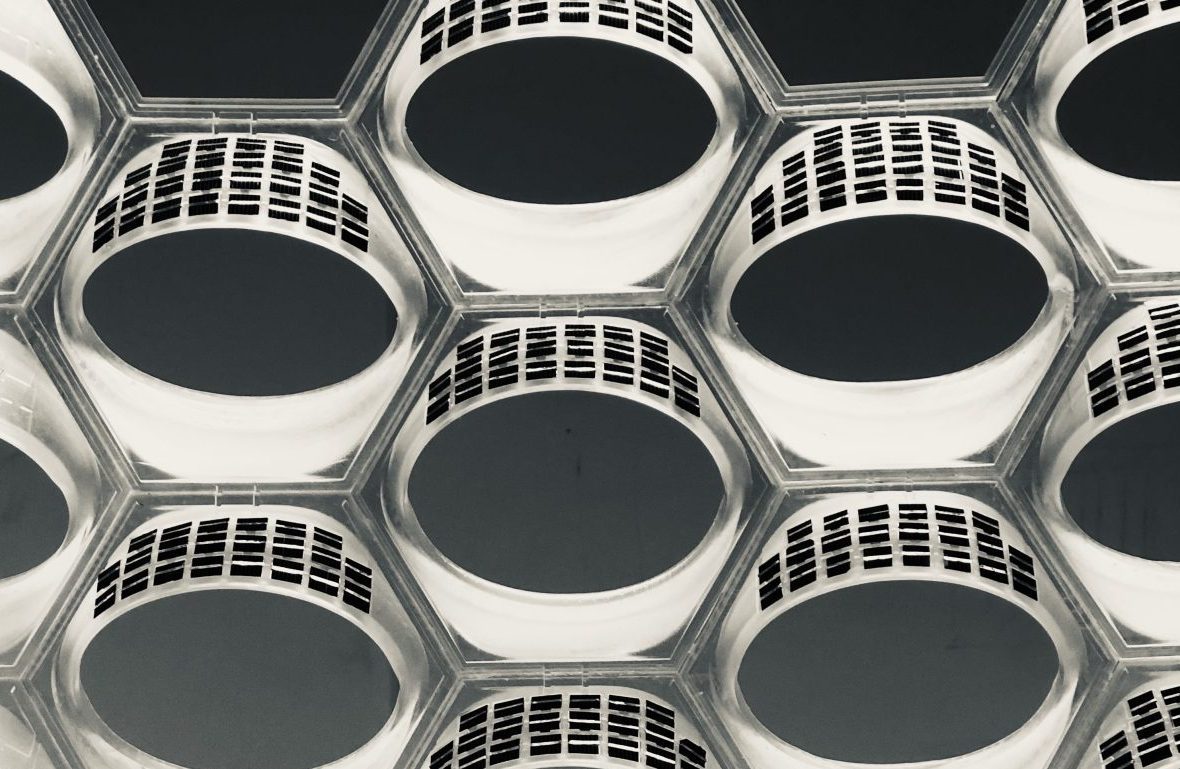
circles with windows on them
Solar Facades for Energy Savings and Clean Power Production
The building enclosure is an important architectural element portraying architectural and energetic performances of buildings. While the solar cell industry has produced PV cell technologies that are cost effective, the number of BIPV systems in architectural applications remains limited primarily due to the systems’ upfront cost, low conversion efficiency, and unpleasing appearance. Our NSF funded solar facade system, as a primary building enclosure, consists of a network of adaptable solar modules that is optimized based on climate data and multi-functional requirements of power production, solar heat gain control, daylight penetration, and views out, depending on façade orientation and climate locations. Unlike conventional BIPVs that are not not transparent, our climate-responsive system offers view out and optical clarity providing higher occupant satisfaction.
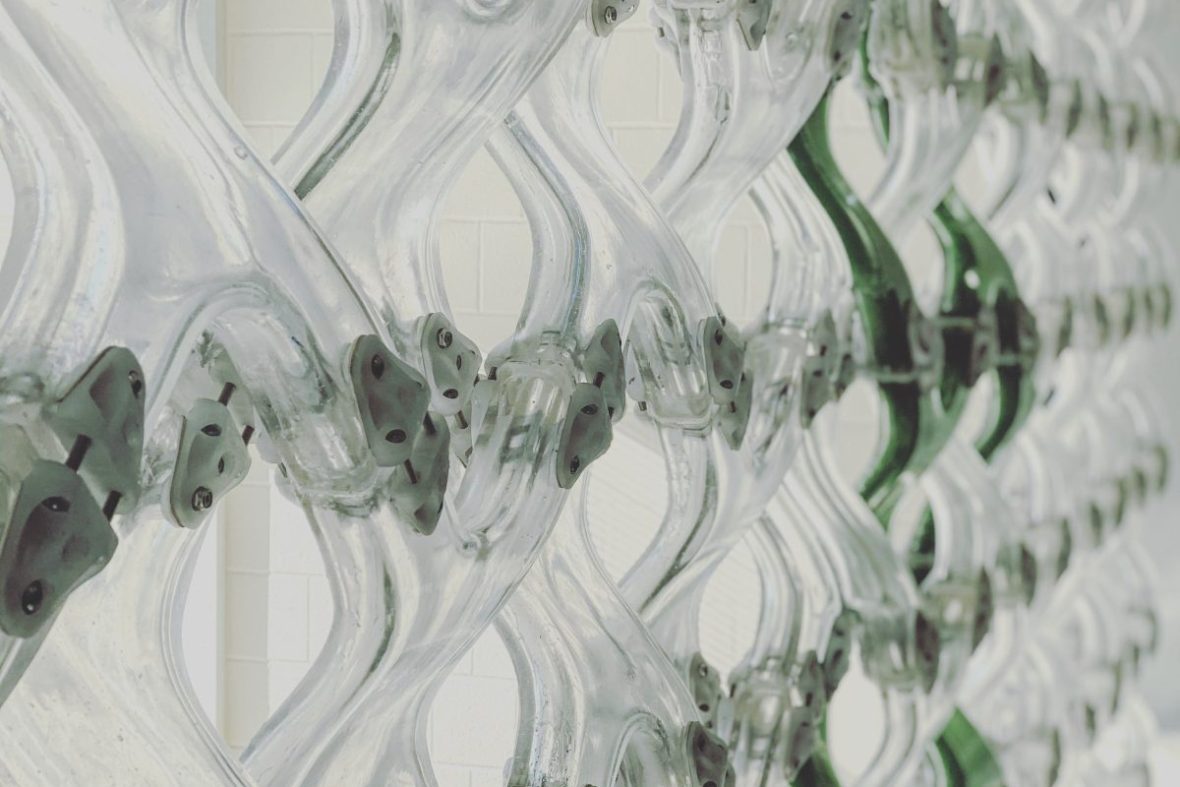
micro algae wall close up
Biochromic Facades towards Carbon Neutrality
The NSF sponsored biochromic windows innovatively integrate a biological system – microalgae – within the window assembly, resulting in a cost effective and easy-to-install alternative for retrofitting low-performing commercial windows. As a mediator between indoor and outdoor environments, the biochromic window offers dynamic shading efficacy and thermal properties, daylighting performance, structural integrity, water tightness, air tightness, and long-term durability. In addition, the windows benefit building occupants by providing good indoor air quality and outdoor views for improved health and wellbeing. The key constituents of our system are described fully in a patent application (Patent Number: 17/070,124; Inventor-Kyoung Hee Kim) filed by the University of North Carolina at Charlotte.

Advanced Materials & Structural Systems

The MycoMatters Lab explores cooperative logics between fungal growth, computational design, and digital fabrication. Through interdisciplinary and industry collaborations, the lab seeks demonstrate new material assembly systems that contribute to circular material economies and lessen the impact of the architecture, engineering, and construction industries on climate change.

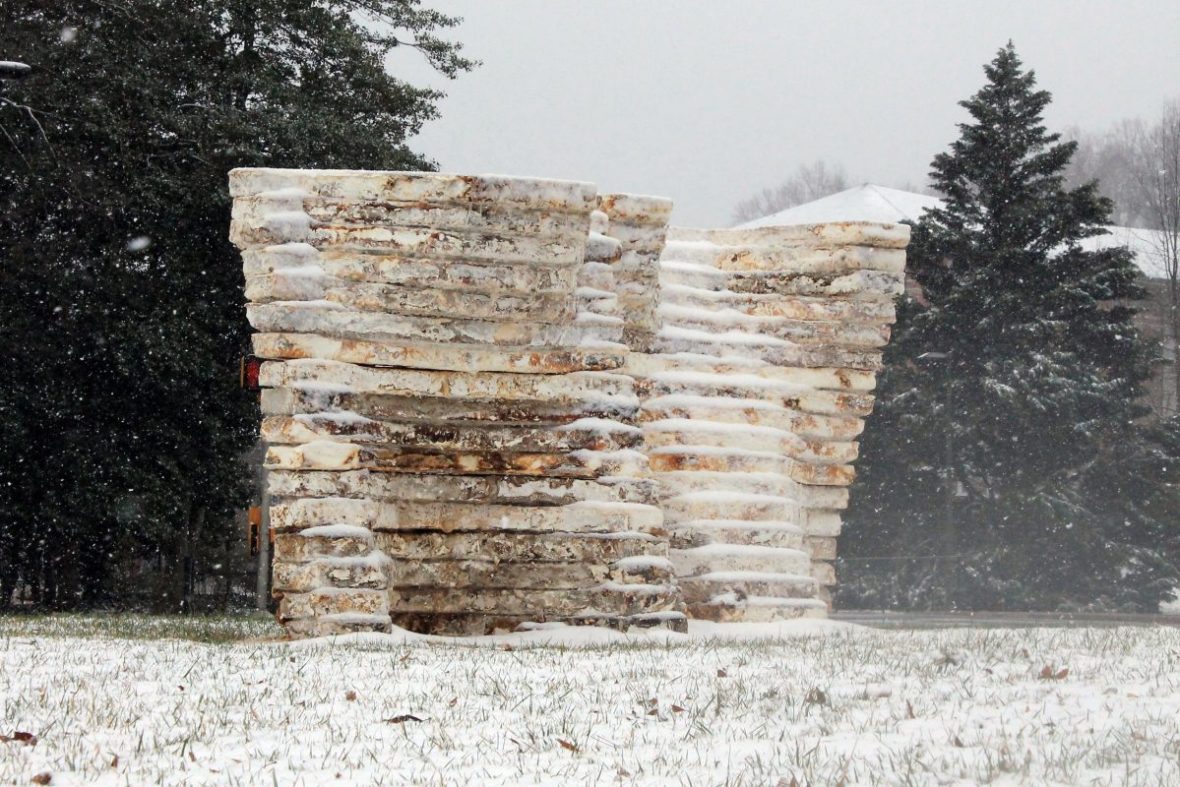
structure in the snow
Strategies for Growing Large-Scale Mycelium Structures
Fungi-based materials (myco-materials) have been celebrated and experimented with for their architectural and structural potential for over a decade. This paper describes research applied to assembly strategies for growing large building units and assembling them into efficiently formed wall prototypes.
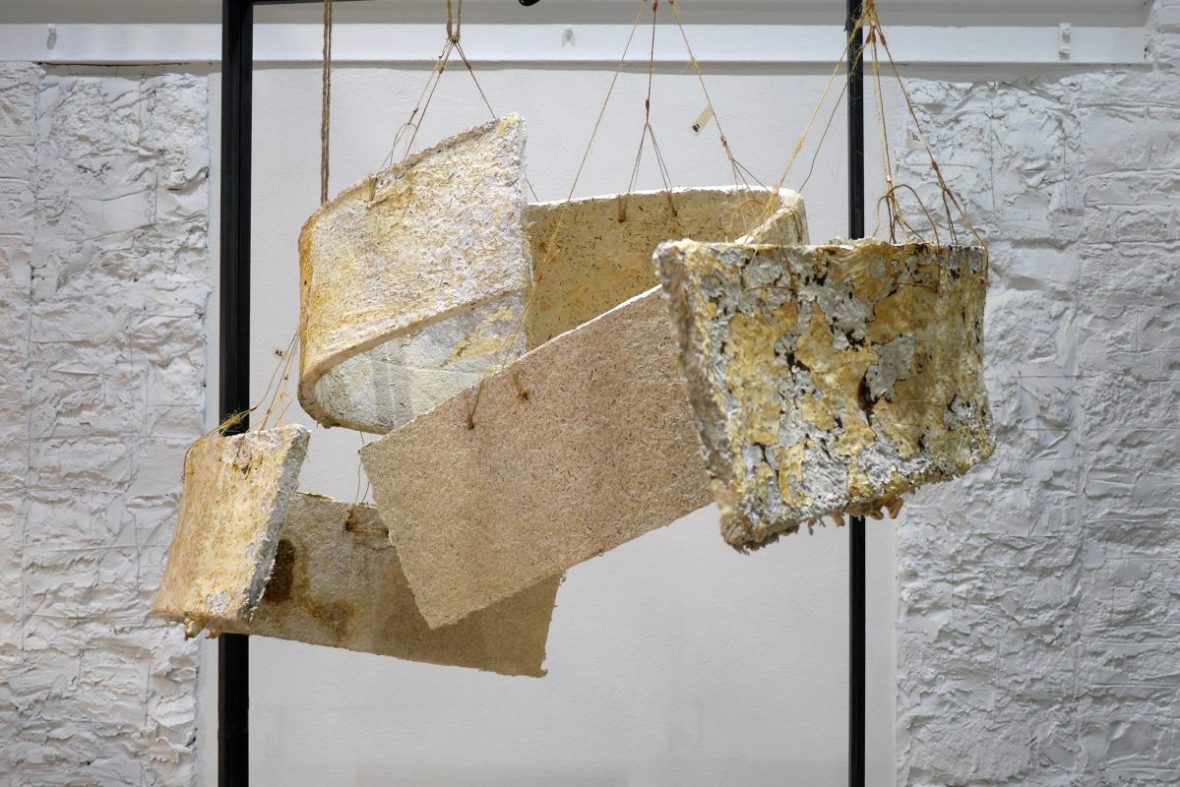
mushroom sculpture hanging
The Mycelium Project: Growing House Parts
This project took place over the course of a 3-part AIA continuing education workshop series hosted by the Center for Architecture/AIA New York Custom Residential Architects Network. The online events explored the potential of fungi for the decarbonization of residential building components through a speculative design commission to renovate a conservatory space with custom parts made entirely out of myco-materials.
digital white blob
A Simulation-Validated Shape Grammar for Architectural Acoustics
This paper presents a visual language for designing acoustical arrays using a shape grammar that encodes formal and performance data through labeled and weighted acoustic panel representations. This ultimately leads to creative visual expressions of design rooted in acoustic theory and performance.

Advanced Environmental Systems

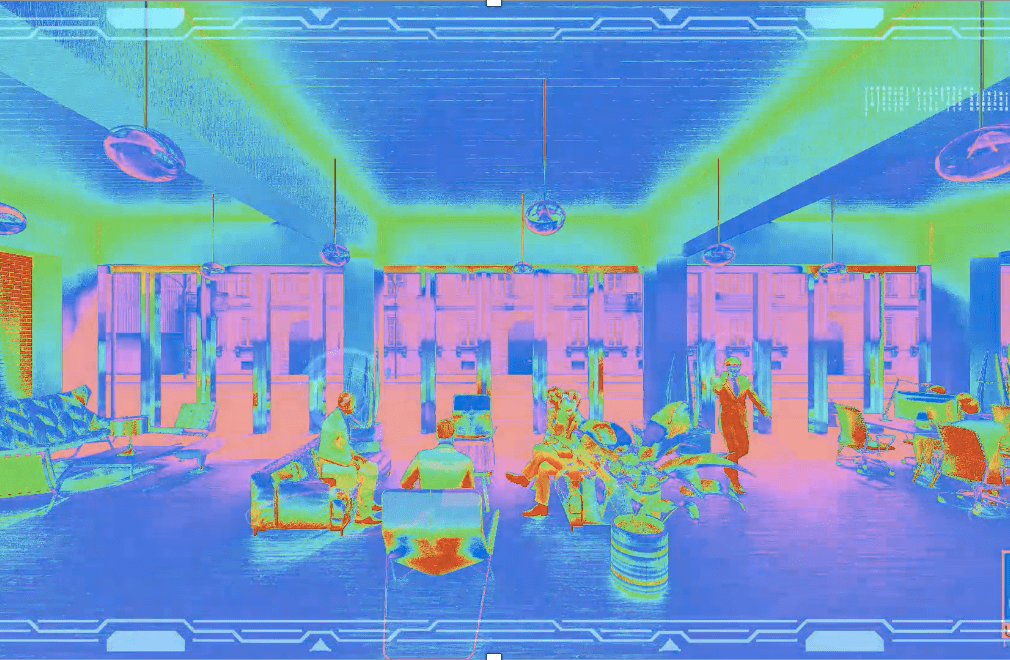
heat map coloring of an inside of an office
AI Thermal Comfort Imaging
The project AI Thermal Comfort Imaging is a contactless non-intrusive data collection approach for the creation of healthy energy saving built-environment. The research will investigate collecting thermal condition data directly from the occupants in a completely non-intrusive approach through the integration of thermal and RGB cameras.
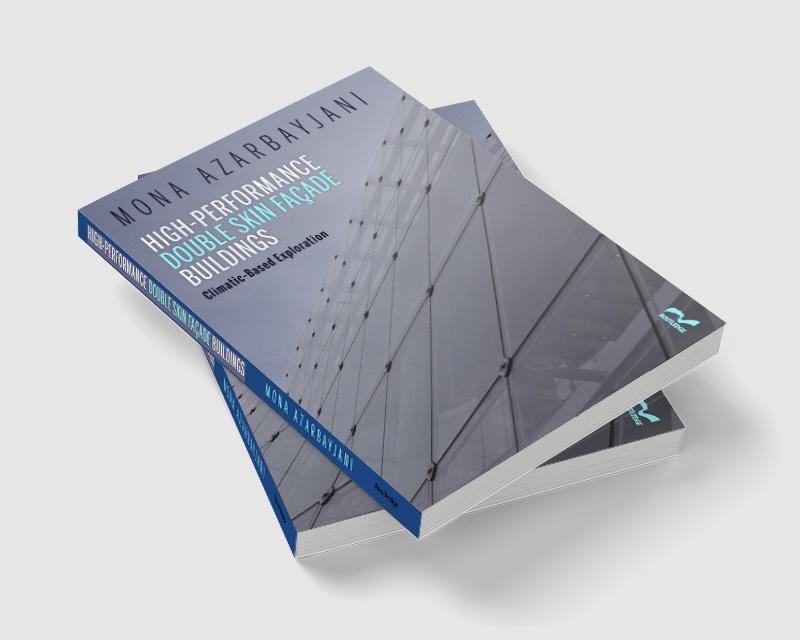
textbooks with a grey cover
High-Performance Double Skin Facade
This book provides a theoretical platform for the use and construction of double skin façade projects. This concept has been used mostly in European buildings; however, its success in other climates should be addressed. More buildings are featuring double skin façade technology in the US, but few have been studied for their performance in operation.

Affiliated Research Programs & Student Research

The Master of Science in Architecture (M.S.) is a graduate degree focusing on emerging research critical to the architectural profession, which requires expertise that exceeds current criteria for accredited professional degrees. The Ph.D. in Infrastructure and Environmental Systems (INES) integrates science, technology and management disciplines for students who are researching the complex challenges facing urbanizing regions. Click through to learn more about these programs, and see student project examples, below.

Ph.D. Program in Infrastructure and Environmental System
Student Research

Parking Lot Materials Emissivity and Its Effect on the Urban Environment

This research by Savannah Cherry aims to evaluate the emissivity and thermal properties of common parking lot materials in the United States, including asphalt, gravel, and grass. The objective is to assess these materials’ thermal characteristics to support designs that help reduce their impact on urban surface and air temperatures. Throughout the study, the grass lot consistently recorded the lowest average temperatures, both during the day and night, showing an average 11.33% reduction compared to asphalt and gravel.

Student Research

Effective Parameters on the Performance of Photovoltaic Double Skin Facade

The adoption of tiny houses, characterized by a footprint of less than 400 ft², emerges as a compelling alternative to conventional residences, offering solutions to enhance sustainability across social, economic, and environmental dimensions. The project by Parham Kheirkhah Sangdeh assesses the potential of different climate zones for achieving net-zero energy tiny houses, with emphasis placed on selecting the most densely populated city with the highest average house rent in each region.

Student Research

Courtyards and Energy Modelling: Passive Design Representation

This project by Nathan King investigates the simulated impact of punctures in simple envelopes, using projected energy use as a baseline for efficacy between iterations. The overall research question concerns how courtyards can be used as part of an effective passive design solution, with a focus on how their efficacy can be proven in simulations and represented to other designers & project stakeholders. The study as conducted showed that although it appeared outwardly that necessary climate data was available to prove the efficacy of certain puncture positions, the simulation calculations were seemingly not detailed enough to accurately represent the differences between different puncture positions in a consistent form.

Student Research

Conditions Computational Analysis of Power Loss Reduction in BIPV

Integrating photovoltaic (PV) panels into buildings as a source of clean energy has been a widely established method to achieve net-zero energy buildings. While rooftop installed PV panels have been extensively implemented, with more urban area development and population growth, the rooftop area of high-rises will not be sufficient to meet the whole building’s electricity demand. This thesis by Hamideh Hossei investigated the different BIPV’s array configurations and PV cell circuit connections to achieve higher energy yields while addressing design requirements in BIPV facade systems.

Student Research

Balancing Performance and Human Experience of BIPV Systems on Office Environments

While there is considerable research on the performance and aesthetics of BIPV systems, there is less focus on understanding how these systems affect the human experience. Without a deeper investigation into how BIPV installations influence office workers’ sentiments, progress in integrating these systems may be hindered. The goal of this research by Faith Tootle is not to find a single solution but to offer insights that can guide the future integration of BIPV systems in a way that takes both human comfort and sustainability into account.

Student Research

Photocatalytic Air Cleaning System Breaking Down VOCs to Improve Health

Volatile Organic Compounds (VOCs) are one of the pollutants that impact indoor air quality, leading to many adverse health effects such as asthma and other breathing issues. Building facade is one of the building elements that is in direct contact with sunlight and interior space. Therefore, it can serve as a prime location to implement TiO₂ photocatalytic facade and remove VOCs. The facade configuration studied in this paper by Ketki Parshant Bapat was chosen as a tetrahedron geometry to increase more surface area for coating TiO₂ under a unit volume.

1
/
6

Faculty in the IDRL

Mona Azarbayjani

Jonathan Dessi-Olive

Kyoung Hee Kim

Greg Snyder

Integrated Design Research Lab News

2025
  • IDRL’s Translational Research Symposium was held on March 18, 2025.
  • Indya Barginere and Violet Drinkwater‘s microalgae concrete project, captured in a photograph taken by Hamideh Hossei, has received an award in the national Framing the Future: Industrial Technologies Photo Contest, sponsored by the U.S. Department of Energy. Read more.
  • Hosseini, S. S., Ardabili, B. R.,  Azarbayjani, M., & Tabkhi, H. (2025). Demographic Disparities, Service Efficiency, Safety, and User Satisfaction in Public Bus Transit System: A Survey-based Case Study in the City of Charlotte, NC. Transportation Research Interdisciplinary Perspectives, 29, 101296.
2024
  • Hamideh Hossei continues her work at the Integrated Design Research Lab (IDRL) as a Postdoctoral Researcher. She earned her Ph.D. in Infrastructure and Environmental Engineering from UNC Charlotte in 2024. Her doctoral research focused on the comprehensive assessment of various BIPV typologies to address the Duck Curve problem.
  • Hossei, Hamideh, and Kyoung Hee Kim. “Comprehensive analysis of energy and visual performance of building-integrated photovoltaics in all ASHRAE climate zones.” Energy and Buildings 317 (2024): 114369.
  • Hossei, Hamideh, and Kyoung Hee Kim. “Assessing the PV-integrated south facade in mitigating the BIPV system oversupply.” Energy Reports 12 (2024): 4594-4606.
  • Rashvand, N., Hosseini, S., Azarbayjani, M., Tabkhi, H., (2024). Real-Time Bus Departure Prediction Using Neural Networks for Smart IoT Public Bus Transit,  IoT 2024.
  • Kyoung Hee Kim and her students are featured in a video showcasing high-performance microalgae windows. Watch here: YouTube.
2023
  • Mona Azarbayjani’s publication “High-Performance Double Skin Facade Buildings” provides a comprehensive theoretical platform for the use and construction of double skin façade projects. The DSF concept has been used mostly in European buildings; however, its success in other climates should be addressed. Increasing numbers of buildings are featuring double skin façade technology in the US; however, still relatively few have been studied for their performance in operation.
2022
2021

Research in the College of Arts + Architecture

In the College of Arts + Architecture, research encompasses a wide array of activities, from scholarly articles to the development of new systems and materials, to groundbreaking performing practices. Visit our Research Overview to learn more about the breadth of scholarly and creative innovation in the CoA+A.