Director of Jazz Studies
The Jazz Studies program at UNC Charlotte offers a learning environment that is both engaging and inspiring. With a focus on instrumental mastery as well as artistic expression, the program is committed to the development of young artists. In addition to being the home of the annual 49er Jazz Festival, our creative environment incorporates an extensive calendar of guest artists and clinicians, which have included Branford Marsalis, Marvin Stamm, Ed Thigpen, Dick Oatts, Brad Leali, Scott Wendholt, Rich Perry, Clay Jenkins, Mike Steinel, Jeff Coffin, Harold Danko, Terell Stafford, Jim Riggs, Cyrus Chestnut, David Berkman and Paul McKee.
Explore Ensembles
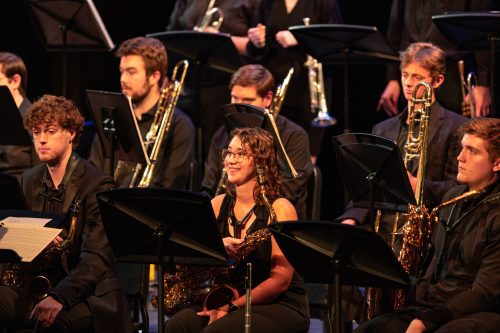
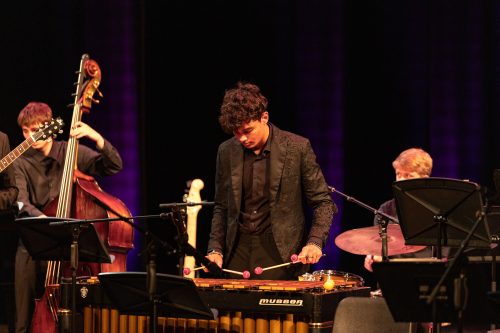
- The Jazz Ensemble (MUPF 1111 and MUPF 1111L) provides students with a solid understanding of the lineage of big band literature from the swing era to contemporary styles.
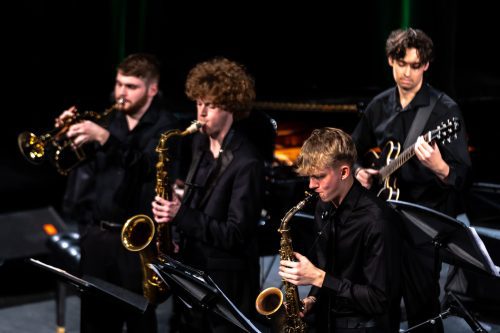
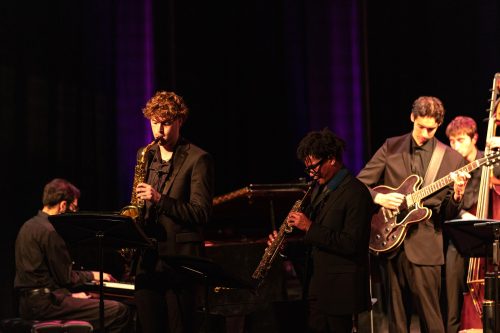
- The Jazz Combos (MUPF 1170) focus more on the element of improvisation in small ensemble settings.
- Jazz Ensemble Techniques (MUSC 1222) introduces the teaching and administration of public school jazz ensembles including rehearsal techniques, and analyzing appropriate literature and teaching materials.
- Jazz Improvisation I (MUSC 2235) is an introduction to jazz theory and its execution through instrumental improvisation, including a detailed study of harmony, chord/scale relationships, musical forms, and the integration of this knowledge into performance.
- Jazz Improvisation II (MUSC 2236) is a continuation of Jazz Improvisation I, with greater emphasis on performance and integration of advanced harmonic/melodic devices and concepts, solo transcriptions, basic piano voicings, and composition memorization.
- Jazz Pedagogy and Materials (MUSC 4128) The teaching and conducting of public school instrumental and vocal jazz ensembles, including rehearsal techniques, concert presentation, the history and theory of jazz, sources for appropriate teaching materials and improvisation techniques. Field work required.
- Jazz Arranging and Composition (MUSC 4124) The study of arranging and orchestration techniques in the jazz style. Detailed analysis of historically important music scores for jazz combo and jazz ensemble. Instrument ranges, scoring techniques, and advanced harmonic substitutions are addressed. Combo and large ensemble writing projects are assigned.
- Jazz History (MUSC 4298) The study of significant musicians and literature in the history of jazz. Detailed analyses of influential scores and recordings will constitute a significant part of the course. Written projects such as research and listening reaction papers will be assigned.
- Jazz Piano Techniques (MUSC 3252) Develops jazz piano playing skills with blues and standard jazz harmonic progressions. Content includes the development of common harmonic techniques in jazz compositions, and the interpretation and performance of them in standard jazz literature on the piano.