Costs & Funding



The David R. Ravin School of Architecture (SoA) is a nationally distinct graduate program for design and research.
The SoA offers three primary graduate degree programs. All three degrees may be pursued individually or may be combined with other programs for dual degrees that offer more efficient pathways to earning two graduate degrees. The Master of Architecture (M.Arch.) is a NAAB-accredited professional degree that prepares students to become licensed architects and leaders in the built environment. The Master of Urban Design (M.U.D.) is built on the premise that urban design is a fusion of physical design, policy and implementation strategies. The Master of Science in Architecture (M.S. in Arch.) offers specialized coursework and in-depth investigation, preparing students for leadership roles in architectural research.
Our graduate students come with diverse backgrounds, including undergraduate degrees in art, architecture, technology, interior design, engineering and other fields, and enter our M.Arch I program. Our M.Arch II program is for students with an undergraduate degree in architecture.
Students may wish to combine their studies with graduate work in other programs. Dual Degree options allow you to earn degrees across two academic disciplines. Students must apply to each program separately and be admitted to both programs. Dual degree students must satisfy all individual degree requirements with the added benefit of sharing a limited number of credits between the two programs.

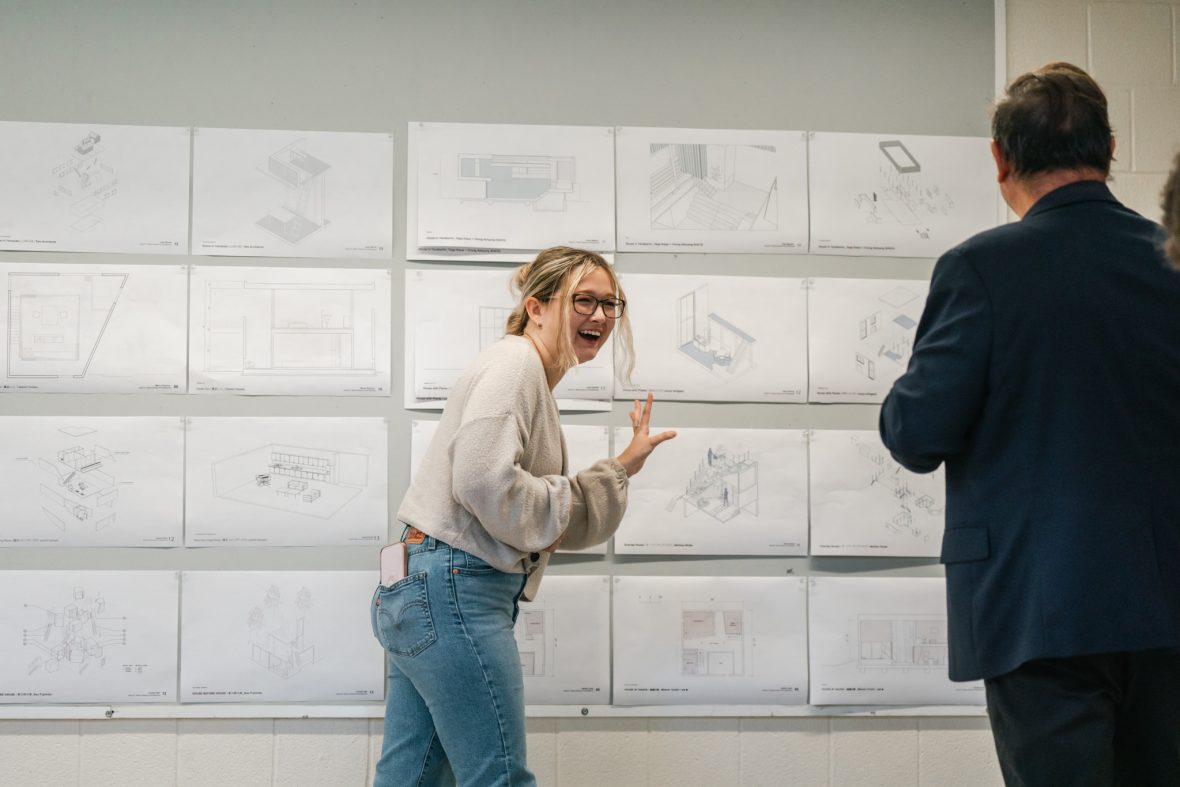

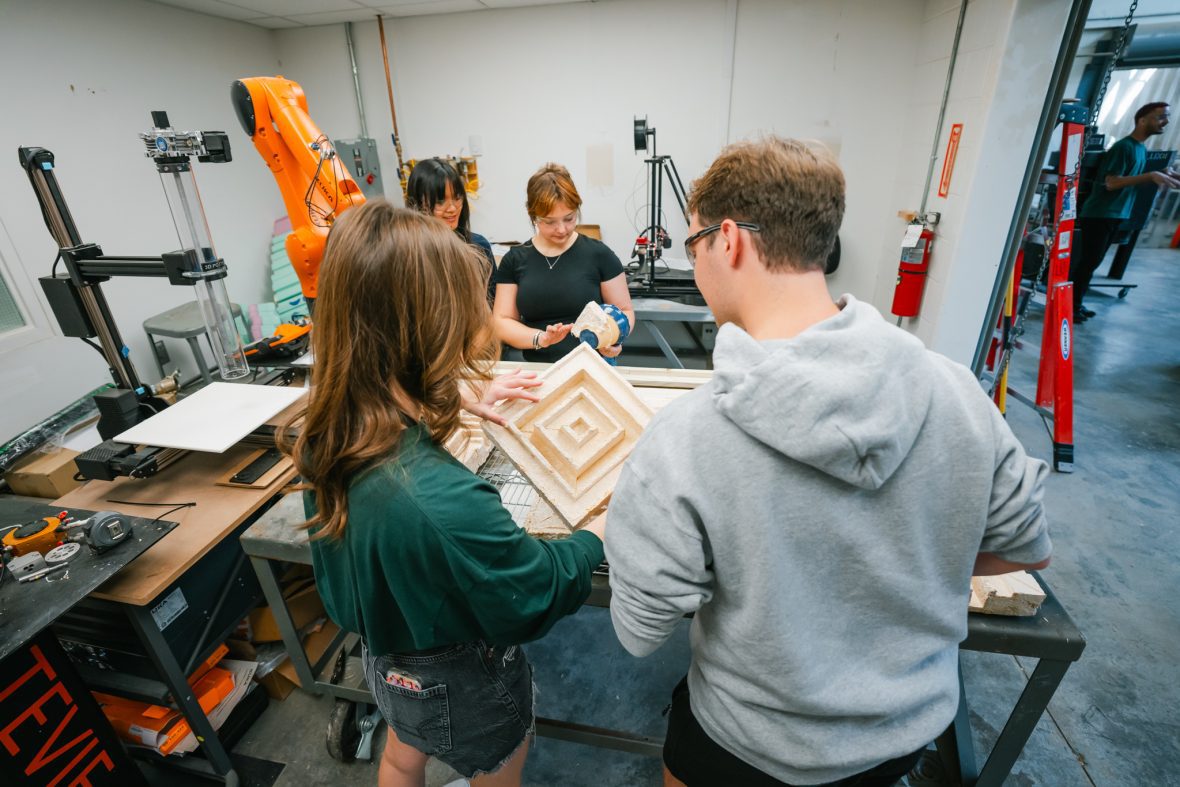


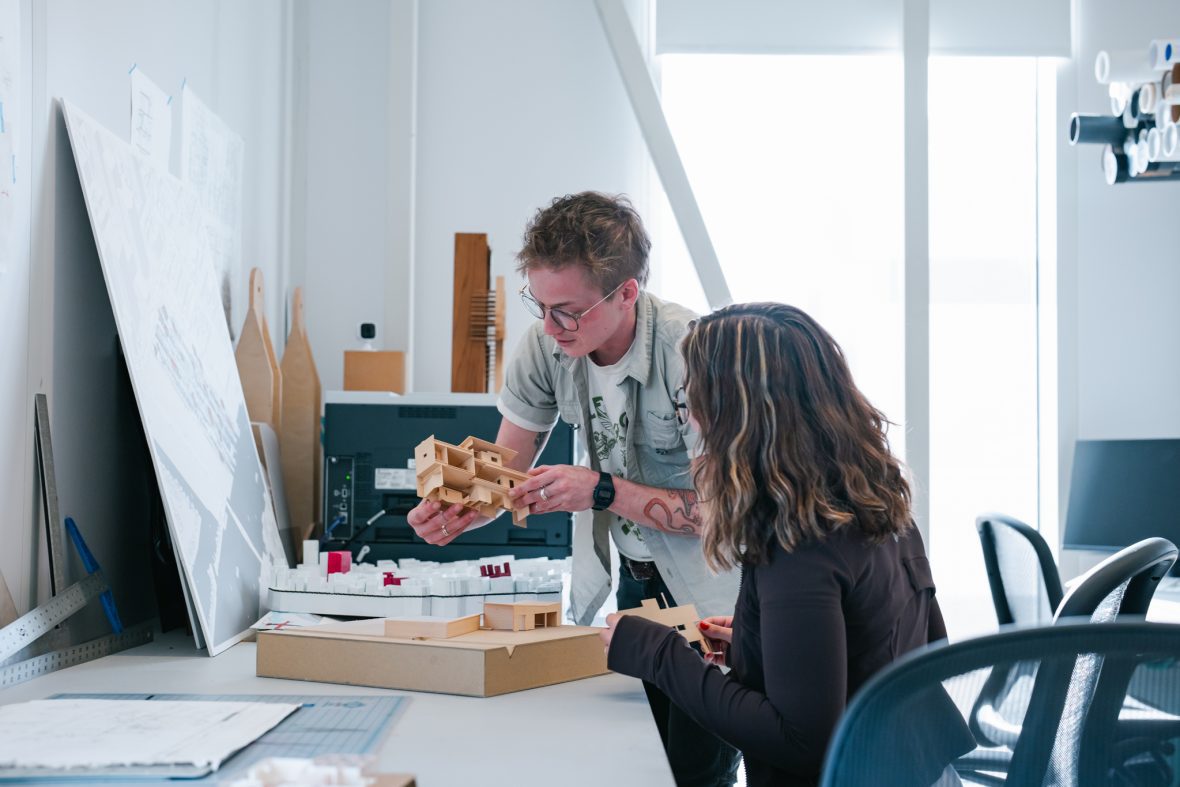
If you are considering graduate school in architecture, we welcome the opportunity to introduce you to our award-winning programs and school. Explore below to learn more about our graduate admissions process, requirements, tours, open houses and more.
For questions about the graduate admissions process and requirements or about the School of Architecture, please contact us at soa-grad-admissions@charlotte.edu.
The SoA Admissions team will host two open house sessions this fall – one in person and one virtually on ZOOM. The information at the two open houses will be the same; the virtual option is just there for those who are unable to travel to visit us in person. At the open house you will have a chance to meet our faculty and students and learn about the School of Architecture and all of our graduate programs. We will also share information and answer questions about our research and extracurricular, dual degree, and funding opportunities as well as about our facilities and the application timeline.
These sessions will take place on the following two dates:
To sign up for either of these sessions, please use this registration form. Once you are registered you will receive a follow up email with detailed information.
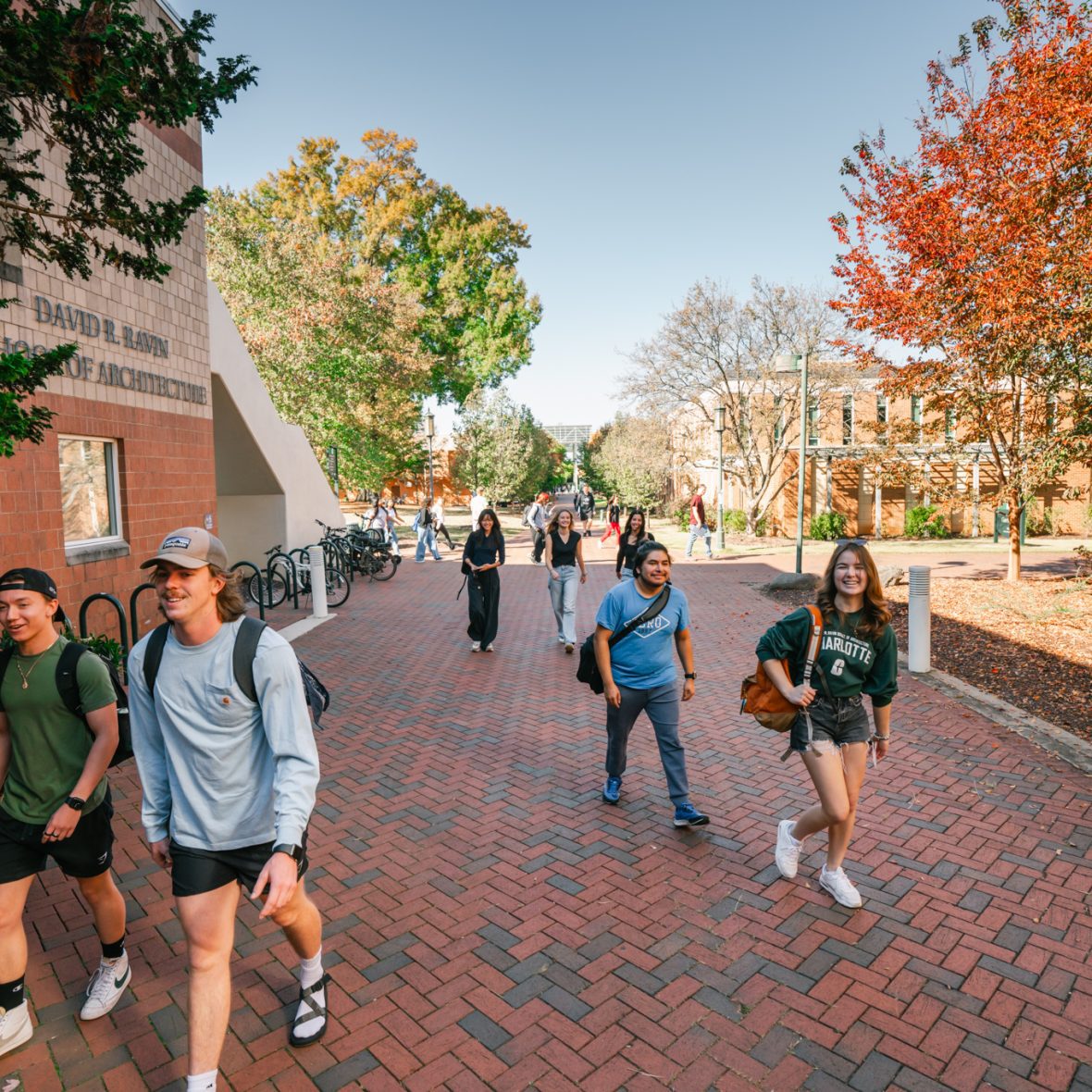
There are three ways to tour Storrs Hall, the building on the UNC Charlotte main campus where the David R. Ravin School of Architecture is located.
In-Person Tours: During the Fall 2026 semester, we will offer in person tours on Thursdays at 3:00. These tours occur while classes are in session, giving prospective students an inside look at their future as 49er architecture students! These tours offer applicants the opportunity to meet architecture students who co-lead the tours. Walk-ins are welcome, but so we can accommodate you best, we encourage you to register for a tour using this tour sign-up link.
Self-Guided Tours: Prospective students are welcome to explore Storrs Hall anytime during regular business hours using this downloadable guide. You may encounter a student, staff member, or faculty member along the way, but we can’t guarantee that you will be able to speak to anyone (emailing us and/or attending one of our scheduled events is highly recommended).
Virtual Tours: Prospective students can take a virtual tour by clicking here to watch a student-led tour video.
Prospective Master of Urban Design (MUD) or dual degree students interested in touring the Dubois Center in uptown Charlotte, which houses the MUD program, should reach out to MUD Program Director Ming-Chun Lee at Ming-Chun.Lee@charlotte.edu.
The application process is submitted online via the University’s Graduate School Apply Now link. All materials for the application process are submitted electronically. Application completion status can be checked via the Graduate School’s application portal. Applications will only be reviewed if they have been officially completed. It is critical that you check your online application frequently in order to insure everything has been received. The Graduate Record Examination (GRE) is not required. See below on more information on the admissions process.
Application: Apply via the University’s Graduate School Application Link. Submit all forms electronically. The GRE is not required.
Deadlines: The priority deadline for all application materials to be submitted online for the MArch, MS, and MUD programs is January 15 for admission to the following academic year. Only applications received by this priority deadline will be considered for funding. Applications received after this date will be reviewed on a rolling basis as space permits in the programs.
Timeline:
Your portfolio is an expression and demonstration of your creative work. This should be common practice for 2-year MArch applicants familiar with the process of creating one. For 3+ MArch students (who typically have degrees in fields outside of design), it is suggested that you include work from courses in: visual art, sculpture, photography, personal projects, etc. You may also include samples of architectural work from offices if you’ve had such experience. In addition, you may also consider any creative work such as essays or reports that you have authored during your college/professional career(s). In general, any creative work you deem worthy may be included in the portfolio.
Digital Portfolio Requirement: The format for the portfolio is limited to a maximum size of 8-1/2” x 11”. It should be formatted as a pdf document and uploaded as part of the online application process. What you include in this folio is an indication and demonstration of your creativity. In all cases it should be elegant, concise, and a demonstration of your skills and visual sensibilities. A typical portfolio may have a total of 15-20 pages that demonstrates your accomplishments in an organized, narrative, and visual manner. Each piece featured should be presented with high-quality images and a brief text description. The careful composition, layout, and visual presentation of the portfolio are also important indicators of your creativity.
The following requirements are expected of applicants to the M.Arch. program:
Which program do I apply to if I have completed a four-year bachelor’s in interior design and/or architectural technology?
Are there prerequisite courses that I must take for the 2-year MArch II or 3+ year MArch I degrees?
I am a 2-year MArch applicant, but I did not take Structures 2 during my undergraduate degree, however I completed everything else. Do I need to complete this class before I apply?
I have already taken courses that are required in your graduate program. Will I have to repeat these?
There are a number of awards that all accepted applicants are assessed for during the admission process. These are awarded to the most promising new graduate students on a merit basis. For MArch applicants with design backgrounds, awards are based on prior academic and professional experience as well as skills and achievements in architecture. For 3+ MArch students, awards are based on academic achievement and promise.
There are four types of awards:
May I take course work as a post-bac student in the School of Architecture prior to admission?
Can I attend the program as well as work part-time outside of classroom hours?
We welcome applications from international students interested in graduate studies at the University of North Carolina at Charlotte. The information below should provide an overview of key concerns, but for more information about the application process for international students in general, see the Graduate School International Admissions website. For more information about on-campus resources for international students, please explore all the information on the website of the International Students/Scholars Office.
For admissions to UNC Charlotte, we require demonstrated English proficiency with an IELTS overall minimum score of 6.5, a minimum paper-based TOEFL score of 577, or a minimum internet-based TOEFL score of 83, or a minimum Duolingo score of 115.
To be official, scores must be sent directly from the testing agency to UNC Charlotte and typically should be within the past two years. More detailed information about the tests, submission process, and who is exempt from these requirements can be found at the UNC Charlotte Graduate School’s English Language Proficiency website.
Applicants who do not meet the minimum English language proficiency requirement will not be admitted to UNC Charlotte. They may, however, choose to enroll at UNC Charlotte’s English Language Training Institute (ELTI) and then re-apply to the Graduate School. For details, see the ELTI website.
International students admitted to a graduate program at UNC Charlotte must confirm their intent to enroll before the University can begin paperwork for the F-1 or J-1 visa. As part of the online enrollment form, and prior to generation of visa documents, international students must provide a financial certification that they are able to cover the full cost of attendance.
The International Student and Scholar Office (ISSO) manages the 1-20 process and faculty and staff within the School of Architecture are not able to answers questions about the visa process.
For more detailed information about post-acceptance requirements, included applying for a U.S. visa, please see the UNC Charlotte web page for Enrollment Requirements for New Intentional Applicants and Information for New International Students and the FAQ for new International Students.
There are dormitories and other housing options on campus as well as many apartments for rent within walking distance of the university. For more information about on-campus housing, please see the Housing and Residence Life website. In addition, information about moving to Charlotte can be found on the International Students website.
As international applicants plan their arrival in Charlotte, they should keep in mind mandatory International Student Orientation dates that begin mid-August.
Liz McCormick (emccorm4@charlotte.edu)
Sabri Gökmen (sgokmen@charlotte.edu)
Dr. Ming-Chun Lee (Ming-Chun.Lee@charlotte.edu)