Musicologist’s New Book Celebrates Heroism in Harrowing Times
A decade ago, Professor of Musicology James A. Grymes received a National Jewish Book Award for “Violins of Hope: Violins of the Holocaust—Instruments of Hope and Liberation in Mankind’s Darkest Hour,” published by Harper Perennial in 2014. Since then he has lectured about the book all over the country – including at the United Nations – and has been interviewed by preeminent news outlets such as the New York Times and the Wall Street Journal.
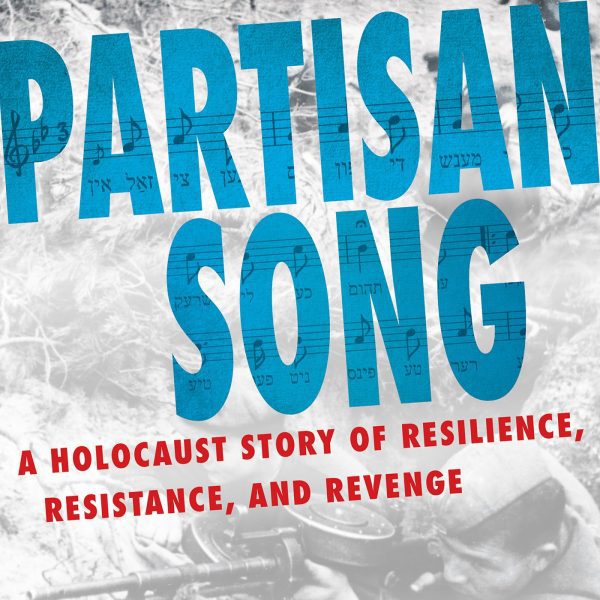
Grymes’s newest book, “Partisan Song: A Holocaust Story of Resilience, Resistance, and Revenge,” comes out on January 27, International Holocaust Remembrance Day. Published by Citadel Press and distributed by Penguin Random House, it chronicles the story of Jewish resistance fighter and amateur musician Moshe Gildenman.
Here, Grymes reflects on his research, the hero at the book’s center and how music provided courage and hope in harrowing times.
What led you to write this book?
“Violins of Hope” includes a chapter on Motele Schlein, a young violinist who became something of a second son to the subject of “Partisan Song,” Moshe “Uncle Misha” Gildenman. Gildenman was a peaceful community leader who had never even held a weapon until the Nazis occupied his hometown in Ukraine and killed 2,200 Jews, including his wife and their 13-year-old daughter. He vowed revenge, escaped to the forest with his son, and formed one of the most successful partisan units in the guerilla war to liberate Ukraine. I wasn’t able to go into much detail about Gildenman in “Violins of Hope,” but his fascinating story really stuck with me.
What was your research process?
I spent several years collecting Gildenman’s testimony and writings, along with those of his son and other partisans in his brigade, from various archives. Gildenman also wrote four books in which he mentioned musical activities among the partisans, without offering many clues about what they were actually singing and playing. Gildenman was an avid musician and songwriter, and I knew that it would be impossible to truly understand him and his fellow partisans without also understanding the music that they made together.
In May 2022, I stumbled onto a cryptic reference to a “Songbook of Misha” on an old website. After some digging, I found a copy of a Yiddish songbook that Gildenman had folded in half and kept in his shirt pocket throughout the war. The same trail led me to a notebook of war songs that Gildenman’s son had collected. I had finally identified the music that Gildenman and his son not only made but actually carried with them throughout the Holocaust. At last, I was ready to tell Gildenman’s story.
As you conducted your research, were there any particularly moving discoveries?
I continue to be amazed and inspired by how the power of music enabled the victims of the Holocaust to hold onto hope, even in the very worst of times. In “Violins of Hope,” I wrote about how making music allowed prisoners in ghettos and concentration camps to preserve a sense of normalcy and reinforce cultural identity, and this theme continues into “Partisan Song.” Gildenman experienced immense trauma during the Holocaust. Throughout it all, he held onto his book of Yiddish songs and continued to make music around the campfire with his fellow Jewish partisans.
Why is this book important?
I hope that “Partisan Song” brings attention to two aspects of the Holocaust that are often overlooked. When we teach the Holocaust, we tend to focus on the 2.7 million Jews who were murdered in killing centers like Auschwitz-Birkenau. We sometimes omit the 2 million Jews who were murdered in eastern Europe in what is called the “Holocaust by Bullets”—genocidal acts committed not in camps or ghettos but in mass shootings, which is how Gildenman’s wife and daughter were murdered.
I also hope to bring more attention to the Jewish partisans. Somewhere between 20,000 and 30,000 Jews escaped from Nazi ghettos and camps and, like Gildenman, engaged in guerrilla warfare against the Nazis. In Partisan Song, I write about the battles they fought as well as the camaraderie they formed.
Besides the book, are there other products/outcomes of your research?
I have reconstructed some of the songs that Gildenman wrote in the ghetto and in the forest. Members of our University Chorale will perform them locally on Feb. 26 at Temple Beth El and in New York City on March 9 at the Center for Jewish History. The presentation will intertwine readings from“Partisan Song” with a selection of Holocaust-era songs, including music from Gildenman’s Yiddish songbook. The program will pay tribute to Gildenman’s heroic efforts to avenge the murders of his family members and liberate his homeland, while also preserving Jewish culture.